Take Charge Today Curriculum

Learn more about our innovative, research-based financial education program that helps students build real-world money management skills.

Results-Driven Curriculum

The Take Charge Today curriculum is research-based, relying on current research to design lesson plans and instructional materials that empower youth to make better financial choices. By going beyond a basic knowledge of personal finance, Take Charge Today promotes positive financial identities, financial attitudes, and self-beliefs.

Field Tested Lesson Plans

With the support of our Educator Teams, we combine the research-based insights with interactive, hands-on activities to develop a comprehensive and flexible curriculum.

Before releasing the curriculum for general classroom use, every lesson plan is field tested in classrooms with diverse student populations. This comprehensive approach minimizes the effort for the classroom teacher and maximizes the program effectiveness for the student.

Up-to-Date. Ready to Teach.

Our curriculum materials are up-to-date and designed in a ready-to-teach, modular format. Each lesson plan includes hands-on facilitation methods, a note-taking guide, worksheets, a student reading, a PowerPoint presentation and conclusion activities to reinforce key concepts along with assessment options to test knowledge retention.

Content lesson plans are available at the introductory and advanced levels.

Introductory Level (Grades 7-9)

Engage individuals with limited knowledge about personal finance by utilizing fast-paced facilitation and activity-based learning methods.

Advanced Level (Grades 10-12)

A comprehensive series of scenario-based lessons designed using a variety of ready-to-teach instruction options.

Take Charge of Your Finances Course Principles

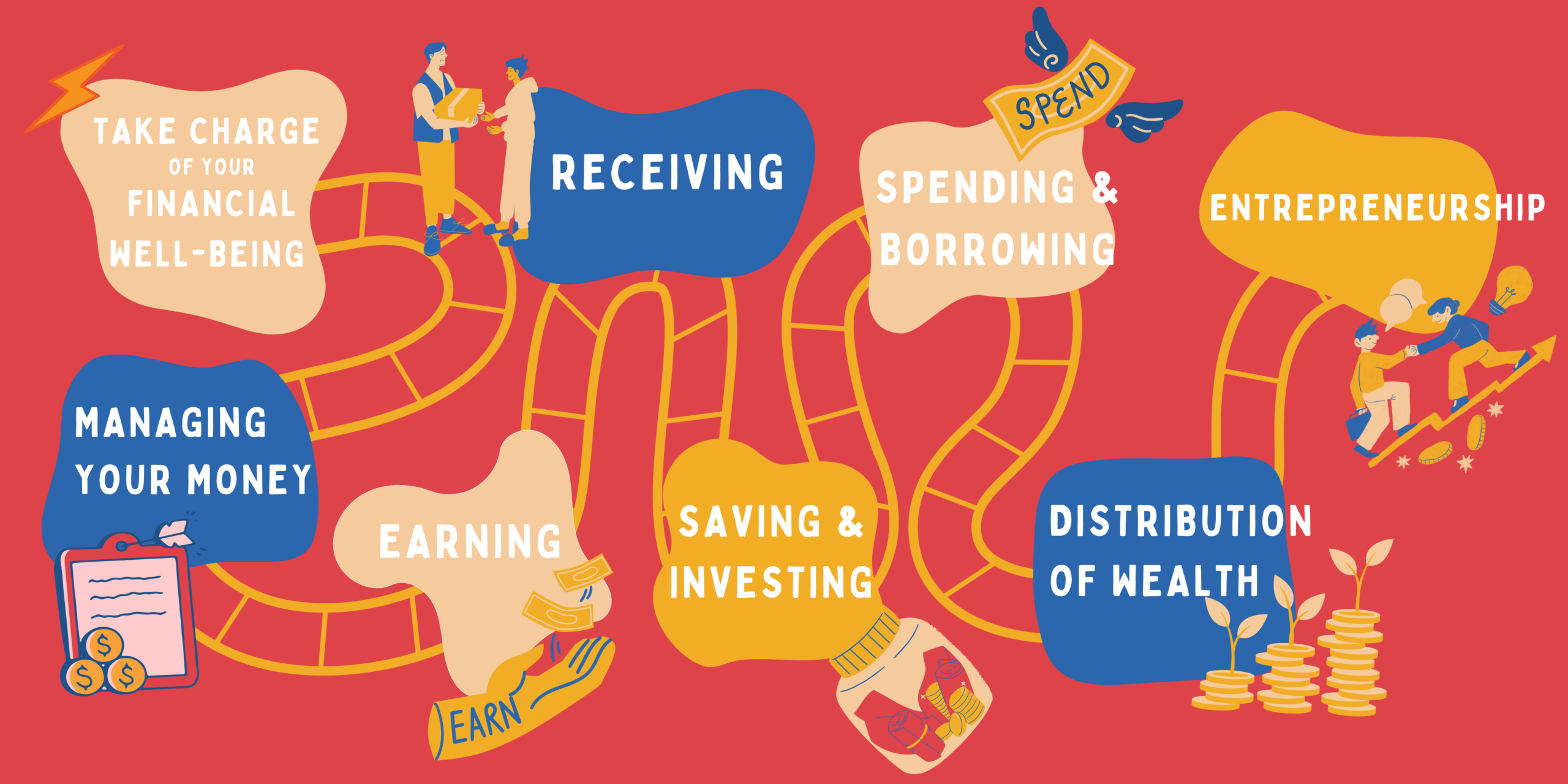
Curriculum Themes

A group of experts gathered in 2009 to formulate the foundations of the Take Charge Today curriculum. The themes developed are based on the model of a free market economy where individuals are important agents working for their own best interests.

The curriculum themes recognize the ongoing bond between individuals, communities and families. The overarching curriculum themes, coupled with the development of critical thinking and decision-making skills, provide educators with maximum instruction flexibility.

DOWNLOAD THIS POSTER

Curriculum Units

Lesson plans are grouped into a series of units with topics that build upon one another to build financial capability and well-being. Units include:

1
This unit introduces how personal choices, habits, and goals shape long-term financial stability and empowers you to take control of your financial future.
2
This unit teaches how to create, use, and adjust a budget to make informed financial decisions.
3
This unit explores how people earn income through jobs, careers, and skill development.
4
This unit covers the different ways individuals receive money, including wages, gifts, allowances, and government benefits.
5
This unit explains how setting aside money and investing it over time helps build wealth and achieve financial goals.
6
Includes borrowing and protecting, this unit examines how to spend wisely, use credit responsibly, and protect yourself from financial risks.
7
This unit looks at how wealth is shared across society and the factors that influence economic inequality.
8
This unit introduces how individuals create and grow businesses by identifying opportunities and taking financial risks.

The Take Charge Curriculum Works

We believe that when you combine good research and good practice, you get good results. And we put that believe to the test in an evaluation of the curriculum. During 2010-2011 an independent evaluator worked with teachers at 15 high schools in eleven states to administer a series of online pre- and post-course surveys to students, using a treatment vs. control group study design.

Read the full report here.